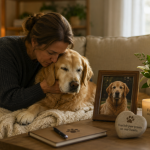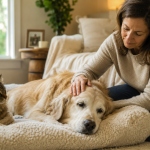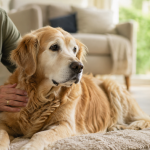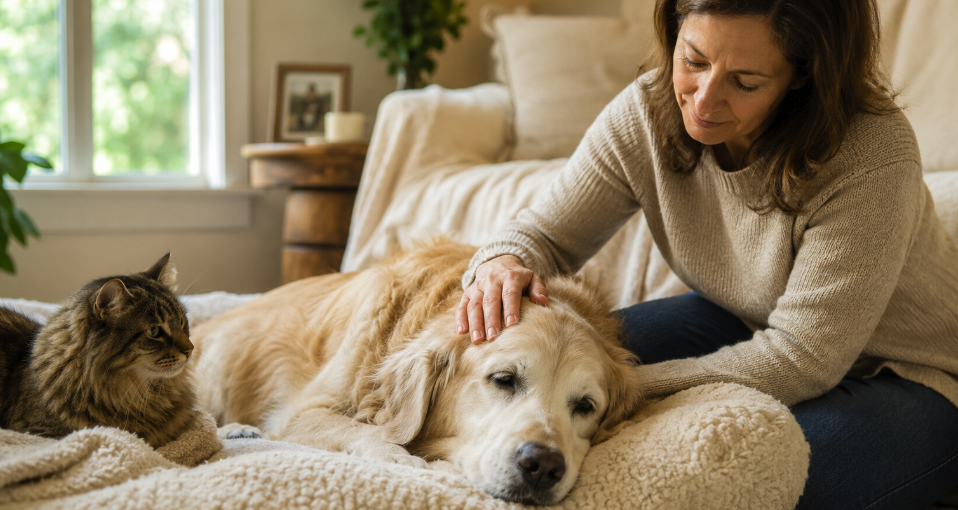
For many families, the pet who is nearing the end of life is not the only animal in the home. Dogs, cats, and other companion animals often share routines, sleeping spaces, favorite people, and years of daily life together. That naturally raises an important question: should your other pets be present during an in-home euthanasia appointment?
In many cases, yes. A calm companion pet can remain nearby during an in-home euthanasia, or can be allowed to approach afterward to see and smell their friend. There is no single rule that is right for every household, however. The best choice depends on each pet’s temperament, the relationship between the animals, the setting, and whether everyone can remain safe and peaceful.
One of the advantages of an at-home farewell is flexibility. Your pets are in familiar surroundings, and you can decide whether a companion stays in the room, rests elsewhere during the procedure, or comes in afterward for a quiet goodbye.
Why Including Another Pet Can Be Helpful
Animals notice changes in the health, scent, behavior, and routine of another pet. They may already understand that their companion is ill even though they cannot understand the situation in the same way a person does. Allowing a bonded dog or cat to be present can make the transition feel more natural because the event takes place within the household rather than having one pet leave and simply never return.
After a pet has passed, some companion animals will approach, sniff, pause nearby, or briefly investigate the body. Others may look from a distance and walk away. Both reactions can be completely normal. The goal is not to make another pet perform a human-style goodbye; it is simply to give them the opportunity to process the change in their own way.
Pet Home Euthanasia specifically addresses other family pets as part of the in-home process. Dr. Michelle Morrison discusses what to do with companion animals during the appointment, and the practice notes that allowing dogs or cats to acknowledge their companion after the passing may help them understand the change.
If you want to understand how the appointment itself unfolds, review The Process before the day of the visit.
When It May Be Better to Separate Another Pet
Being present is not automatically best for every animal. A peaceful environment for the pet being euthanized must remain the priority. Temporary separation may be a better choice if another pet is highly excitable, fearful, protective, reactive around unfamiliar people, or likely to interfere with the veterinarian’s ability to work safely.
• The other pet becomes very anxious when unfamiliar people enter the home.
• The pet is territorial, protective, or has a history of growling, snapping, or guarding the sick pet.
• A young or energetic animal is likely to jump, bark, climb onto people, or repeatedly interrupt the quiet setting.
• The companion pet becomes visibly distressed by medical handling or by the emotions of family members.
• You feel that managing the other pet will keep you from being fully present with the pet you are saying goodbye to.
In these situations, the companion pet can stay in another room, a crate, a secure yard or other familiar space during the procedure and then be invited back afterward if appropriate. That often provides the benefit of a final acknowledgment without creating stress during the euthanasia itself.
Should Your Other Pet Watch the Procedure?
Your companion pet does not need to be positioned beside the patient or made to watch. Some animals naturally settle nearby while others prefer another part of the room. Let them choose a comfortable distance whenever it is safe to do so.
The most important principle is that participation should be natural rather than forced. If another pet wants to remain on a favorite bed across the room, that is fine. If they prefer to leave, that is also fine. If separation is necessary during the procedure, you can still allow a brief, calm visit afterward.
What to Expect After Your Pet Has Passed
Once the euthanasia is complete and your family has had a moment, a companion dog or cat may be allowed to approach if the situation is calm and safe. Give them room to investigate without pulling them closer or repeatedly directing their attention to the body.
• Sniffing the face, body, bedding, or surrounding area.
• Standing or sitting quietly nearby for a short time.
• Walking away quickly with little visible reaction.
• Returning to investigate more than once.
• Seeming restless, searching, vocal, clingy, or unusually quiet later in the day or over the following days.
There is no required reaction. Dogs and cats express social attachment and adjustment differently, and an animal that shows little response at the time of death may still notice the absence later.
Can Pets Grieve the Loss of Another Pet?
Companion animals can show behavioral changes after another pet dies. You may notice searching behavior, changes in appetite or sleep, increased vocalization, greater attachment to family members, reduced interest in play, or changes in routine. These behaviors do not occur in every pet and do not prove that an animal is experiencing grief exactly as a human does, but they can reflect adjustment to the loss of a familiar companion and household routine.
Keep meals, walks, bedtime, medication schedules, and other daily routines as consistent as possible. Offer affection and activity without forcing interaction. If a surviving pet stops eating, becomes physically ill, develops significant behavior changes, or does not seem to be returning toward their normal routine, contact your veterinarian. Medical problems should not automatically be assumed to be grief.
How to Prepare If You Want Other Pets Present
• Tell the veterinarian in advance how many other pets are in the home and whether any are anxious, reactive, or protective.
• Choose a quiet indoor location where your sick pet is comfortable and where other animals can enter or leave without crowding the space.
• Have a second family member available to calmly manage another dog or cat if needed.
• Keep leashes, gates, crates, or another familiar separation option available in case a pet becomes overstimulated.
• Do not force physical contact before or after the passing. Allow each animal to approach at its own pace.
• Afterward, return to familiar household routines as much as possible while watching for meaningful changes in the surviving pet.
What If the Pets Were Not Closely Bonded?
Even pets that did not sleep together or play regularly may still be affected by a change in household membership and routine. They do not need to be strongly bonded for a brief opportunity to investigate afterward to be reasonable. At the same time, there is no need to include a pet that seems indifferent, fearful, aggressive, or more comfortable elsewhere.
The decision is less about whether the animals appeared to be ‘best friends’ and more about creating a calm, safe transition for the entire household.
A Peaceful Goodbye for the Whole Household
In-home euthanasia allows families to shape the final moments around the needs of the pet who is passing while also considering children, other animals, and the routines of the home. For many households, allowing another dog or cat to remain nearby or visit afterward can be a gentle part of that experience. For others, temporary separation is the calmer and safer choice.
If you are planning an appointment and are unsure what will work best for your pets, Pet Home Euthanasia can help you think through the household setup. You can also review The Decision, Services & Fees, or contact Pet Home Euthanasia for guidance about an in-home appointment in the Phoenix metro area. Call or text (602) 321-4022 for scheduling questions and availability.
Other Pets and In-Home Euthanasia FAQs
Should my other dog be in the room during euthanasia?
It can be appropriate if the dog is calm and does not interfere with the veterinarian or distress the pet who is being euthanized. A reactive, anxious, or very excitable dog may be more comfortable in another room and allowed to visit afterward.
Should I let my other pet see the body afterward?
Many families choose to allow a companion pet to briefly approach and investigate after the passing. Let the animal choose whether to sniff, stay nearby, or walk away. Do not force the interaction.
Will my surviving pet understand that the other pet died?
We cannot know exactly how an animal interprets death, but dogs and cats notice changes in scent, behavior, social relationships, and household routines. Allowing a calm opportunity to investigate the companion after death may help make the change less abrupt.
What if my other pet becomes upset during the appointment?
Move the pet to a familiar, secure area and allow the euthanasia to continue in a calm environment. The pet can potentially return afterward for a brief goodbye if it is safe and appropriate.
What should I watch for in a surviving pet after the loss?
Watch for persistent appetite loss, vomiting or diarrhea, major sleep changes, prolonged withdrawal, excessive vocalization, severe anxiety, or other physical or behavioral changes. Contact your veterinarian when changes are significant, prolonged, or medically concerning.