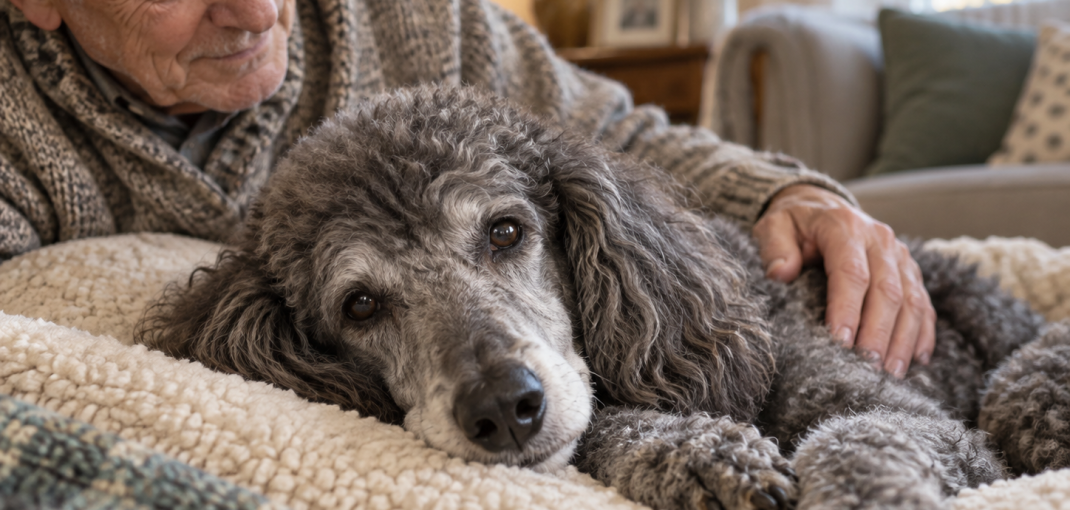
Grief does not always begin after a pet dies. For many families, it starts days, weeks, or even months earlier, when a diagnosis changes the future or a beloved companion begins to decline. This experience is often called anticipatory grief. It can include sadness, anxiety, guilt, anger, exhaustion, and a sense of mourning while your pet is still physically with you.
Anticipatory grief can feel confusing because there may still be good moments mixed with difficult ones. You may be enjoying a quiet afternoon with your pet while also wondering how much time remains. Both experiences can exist at the same time. Recognizing that this is a normal response to an approaching loss can make the emotions easier to understand and talk about.
What Does Anticipatory Grief Look Like?
There is no single emotional pattern. Some people become intensely focused on every change in appetite, breathing, mobility, or behavior. Others feel numb or avoid thinking about what may be coming. You may notice that decisions that would normally feel simple suddenly feel heavy.
- Repeatedly questioning whether you are making the right end-of-life decisions.
- Feeling guilty when your pet has a good day after you have considered euthanasia.
- Worrying about being away from home in case something changes.
- Feeling emotionally exhausted by medications, appointments, cleaning, lifting, or monitoring.
- Grieving future moments you expected to share with your pet.
- Feeling relief when your pet is comfortable, followed by guilt for feeling relieved.
These reactions do not mean you are giving up. They often reflect how deeply connected you are to your pet and how seriously you are taking the responsibility of protecting their comfort.
Focus on Today, Not Only the Final Day
When the future feels uncertain, it can help to narrow your attention to the present. Ask what your pet needs today. Are they comfortable? Can they rest? Are they eating or drinking enough? Can they get outside or use the litter box? Are they still seeking connection or enjoying familiar routines?
Pet Home Euthanasia’s The Decision page provides practical quality-of-life questions that can help you look at the overall pattern rather than one difficult hour or one unexpectedly good afternoon.
Some families keep a simple calendar of good days, difficult days, symptoms, appetite, mobility, and sleep. The goal is not to reduce your pet to a score. It is to create a clearer picture when emotions make it hard to remember how the last several days or weeks have gone.
Give Yourself Permission to Prepare
Preparing for euthanasia does not force you to choose a date before you are ready. Learning what the appointment involves, discussing who may want to be present, considering aftercare, and identifying signs that would require emergency veterinary care can reduce uncertainty.
If you are considering an appointment at home, reviewing The Process can help you understand what typically happens during an in-home visit. You can also review Services & Fees so practical questions about availability and aftercare do not have to be handled during a crisis.
Create Meaningful Time Without Creating Pressure
Families sometimes feel pressure to make every remaining day extraordinary. Your pet does not need a complicated bucket list. Familiarity is often more comforting: a favorite bed moved into a sunny room, sitting together on the patio, a gentle car ride if travel is comfortable, favorite foods when medically appropriate, or simply spending quiet time together.
Photos, paw prints, a clipping of fur, a favorite collar, or a short written memory can also become meaningful later. Choose only what feels natural for your family. There is no checklist you must complete before saying goodbye.
Talk About the Feelings Before the Appointment
If multiple family members are involved, you may not all reach acceptance at the same time. One person may be focused on avoiding suffering while another is still hoping for one more improvement. Try to keep the conversation centered on the pet’s comfort, prognosis, and ability to enjoy daily life rather than on who is more ready emotionally.
Your regular veterinarian can help interpret medical changes and prognosis. A hospice or end-of-life consultation may also help when you need support assessing comfort at home. Pet Home Euthanasia offers phone consultation and hospice examination appointments for Phoenix-area families who are uncertain about the next step.
When Grief Becomes Overwhelming
Anticipatory grief can affect sleep, concentration, appetite, work, and relationships. Leaning on trusted friends, family members, pet-loss support groups, counselors, or grief resources can help. You do not have to wait until after your pet passes to seek support.
If you are caring for a pet with advanced illness, remember that your own exhaustion matters too. Asking someone to help with meals, medications, transportation, or simply sitting with your pet for an hour can give you space to rest without reducing the love or care you are providing.
Support for Phoenix-Area Families
If your pet is declining and you are beginning to think about euthanasia, you can contact Pet Home Euthanasia to discuss your pet’s situation, availability, and next steps. Pet Home Euthanasia provides compassionate in-home end-of-life care throughout the Phoenix metro area. Call or text (602) 321-4022 for scheduling questions or guidance about availability.
Anticipatory Grief and Pet Euthanasia FAQs
Is it normal to grieve before my pet has died?
Yes. Many people begin grieving when a pet receives a serious diagnosis or starts showing significant decline. The emotions can be intense even while you are still caring for and enjoying time with your pet.
Does thinking about euthanasia mean I am giving up?
No. Considering euthanasia can be part of planning for comfort and preventing avoidable suffering. The decision should be based on your pet’s condition, quality of life, prognosis, and veterinary guidance.
How can I stop feeling guilty about the decision?
Guilt is common because there may be no perfect day that removes all uncertainty. Focus on the overall pattern of comfort and decline, discuss concerns with your veterinarian, and remember that the goal is to make a compassionate decision centered on your pet’s needs.