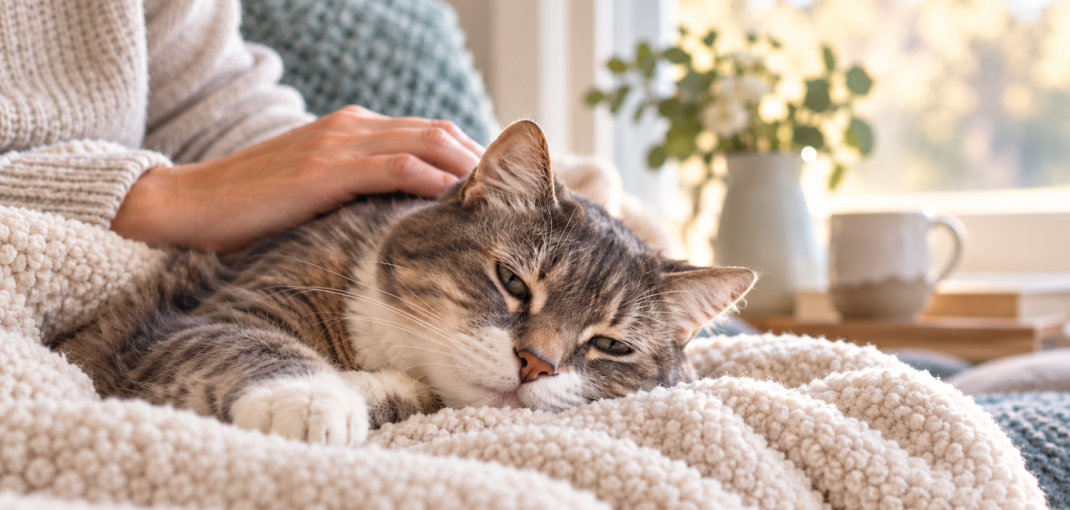
Cats can be remarkably good at hiding pain, weakness, and illness. That trait may protect them instinctively, but it can make end-of-life changes difficult for families to recognize. A cat may continue seeking affection or purring even while experiencing significant discomfort, so the decision about euthanasia should be based on the overall pattern of health and daily function rather than one behavior.
If your cat has a progressive or terminal condition, monitoring appetite, hydration, mobility, grooming, litter-box habits, breathing, social behavior, and response to treatment can help you recognize when comfort is becoming harder to maintain.
Changes in Eating and Drinking
A meaningful decline in appetite is one of the most important changes to notice in an older or seriously ill cat. Skipping one meal does not automatically mean a cat is dying, but persistent refusal to eat, significant weight loss, repeated vomiting, dehydration, or difficulty swallowing warrants veterinary attention.
Some cats with advanced illness may approach food but walk away, eat only tiny amounts, or stop showing interest in favorite treats. A veterinarian can help determine whether nausea, pain, dental disease, medication effects, kidney disease, cancer, or another condition may be contributing.
Hiding, Withdrawal, or Changes in Interaction
Many cats seek quiet, secluded places when they feel unwell. A social cat who suddenly spends most of the day hiding, stops greeting family members, or avoids touch may be showing discomfort or weakness. Other cats do the opposite and become unusually clingy.
Look for change from your cat’s normal personality. Purring does not necessarily prove that a cat is comfortable; cats may purr when relaxed, stressed, or ill.
Mobility and Litter-Box Problems
Difficulty jumping, climbing stairs, getting into the litter box, standing, or walking can significantly affect quality of life. Arthritis, weakness, neurologic disease, cancer, and other conditions can all contribute.
- Missing the litter box because the sides are difficult to climb over.
- Urine or stool on bedding because walking is difficult.
- Slipping, falling, or needing repeated help to stand.
- No longer reaching favorite resting places.
- Remaining in one location for much of the day.
Simple changes such as low-sided litter boxes, non-slip surfaces, food and water placed nearby, and comfortable bedding can sometimes improve daily life. If those adjustments no longer provide adequate comfort, it may be time for a broader quality-of-life discussion.
Declining Grooming and Hygiene
Cats normally devote considerable time to grooming. A coat that becomes greasy, tangled, matted, or covered with urine or stool may indicate pain, weakness, obesity, dehydration, or reduced ability to care for themselves. Some cats may also stop using scratching posts or cleaning their face after meals.
Helping with gentle brushing and hygiene can be supportive, but increasing dependence across several basic activities can be part of a larger pattern of decline.
Breathing Changes Need Special Attention
Breathing difficulty should never be treated as a routine sign to simply monitor at home. Open-mouth breathing, pronounced abdominal effort, blue or very pale gums, collapse, or obvious respiratory distress requires immediate veterinary attention. A cat struggling to breathe should not wait for a later scheduled euthanasia appointment.
Look at the Whole Pattern
Pet Home Euthanasia’s The Decision page includes quality-of-life questions that can help families evaluate eating, elimination, mobility, interest in normal activities, breathing, pain, and the balance of good and difficult days.
One difficult day may be followed by improvement. Conversely, one surprisingly good afternoon does not erase an overall downward trend. Consider whether your cat is returning to a comfortable baseline after setbacks and whether treatments are still providing meaningful relief.
When In-Home Euthanasia May Help
Cats are often stressed by carriers, car rides, unfamiliar smells, other animals, and veterinary waiting rooms. For a frail or anxious cat, an in-home euthanasia appointment can remove much of that travel-related stress and allow the final experience to take place in a familiar bed, favorite room, or quiet location with family nearby.
If you are considering this option, reviewing The Process can help you understand what happens during an in-home appointment. Services & Fees provides current service and aftercare information.
Cat End-of-Life Support in the Phoenix Area
If you are unsure whether your cat’s comfort can still be maintained, you can contact Pet Home Euthanasia to discuss your concerns and availability for in-home care throughout the Phoenix metro area. Call or text (602) 321-4022 for scheduling questions or guidance.
Cat End-of-Life FAQs
What are common signs that a cat may be nearing the end of life?
Common concerns include persistent loss of appetite, weight loss, hiding, reduced grooming, mobility problems, litter-box difficulties, weakness, reduced interest in normal activities, and worsening symptoms from a serious illness.
Does purring mean my cat is not in pain?
No. Cats may purr when comfortable, but they can also purr when stressed or ill. Consider the full pattern of appetite, mobility, breathing, hygiene, behavior, and veterinary findings.
When is a cat’s breathing an emergency?
Open-mouth breathing, obvious respiratory distress, collapse, or blue or very pale gums requires immediate veterinary attention rather than waiting for a scheduled home appointment.